How We Test and Review VPNs


In today’s connected world, using the right digital security tools is essential to protect your privacy and sensitive information online. Virtual Private Networks (VPNs) are crucial in safeguarding your internet activity from hackers, snoopers, and government surveillance. But with so many options on the market, it’s hard to know which VPNs deliver on their promises.
At VPNpro, we conduct thorough testing to ensure each VPN service meets key performance criteria, such as speed, security, and reliability. Our hands-on reviews provide detailed insights into how well each VPN handles streaming, geo-unblocking, and user privacy. In this article, we’ll guide you through our testing process and explain why you can trust our evaluations when choosing the best VPN for your needs.
Why you can trust our reviews
Our VPN reviews are conducted by researchers and writers with hands-on experience in testing consumer VPN services across multiple platforms, use cases, and real-world scenarios. We adhere to strict editorial standards to maintain objectivity, transparency, and reader satisfaction.
VPN companies may partner with us, but these collaborations do not affect our test findings, rankings, or conclusions. To guarantee fair comparisons, all VPNs are evaluated using the same standardized tests and procedures:
- Ethics and Transparency: Every review we publish is based on in-house testing conducted by our experienced team. We never rely on external sources or unverified data. We ensure that our testing process is thorough and compare our findings with those of trusted independent cybersecurity labs to verify the results. Plus, we use the exact same tools and testing methodologies for each VPN provider to ensure accurate results and comparisons.
- Review Process: Our reviews follow strict industry guidelines, and we use trusted tools like ipleak.net and dnsleaktest.com for IP and DNS leak detection, as well as Speedtest by Ookla to measure performance. We test VPNs for geo-unblocking across multiple IP addresses, ensuring that we assess their real-world capabilities. Additionally, we evaluate usability and customer support performance and compare findings with official claims for accuracy. Our use of publicly available tools means any third party can double-check our claims and ensure transparency.
- Up-to-date Information: Cybersecurity services change frequently. That’s why we regularly update our reviews to reflect new features, software updates, or changes in privacy policies, ensuring you always get the most accurate and relevant information.
What we evaluate in VPNs
VPNs are very complex cybersecurity tools. The complexity, of course, helps to shield your privacy, but it also makes it quite difficult to test them thoroughly. However, we have our own methodology for VPN testing and always ground our evaluation on multiple angles. First, we evaluate a VPN’s foundational features, such as encryption, tunneling protocols, privacy policy, and other ground-zero features. Then, we proceed with our leak, speed, geo-unblocking tests, and a good look into the usability and reliability.
We test VPNs using standard consumer subscriptions, purchased the same way you would, to reflect the real-world experience users can expect after signing up. This means evaluating the same features, limitations, and performance available to paying customers, as opposed to testing some enterprise-level functionalities. In cases where free trials or limited plans are used, we clearly account for their restrictions during testing to avoid overstating performance or features.
Here’s a sample of what and how we test:
Security and privacy features
Encryption is the basis of each VPN’s security, with the industry standard being the AES-256 encryption or its newer iteration, the ChaCha20 protocol. Anything older than that is deemed unsafe to use. We also evaluate the efficiency of the Kill Switch feature, additional IP/DNS/WebRTC leak protection measures, offered tunnelling protocols, and extra features, such as obfuscation or stealth modes.
In addition to technical security features, we also evaluate whether a VPN provider can be trusted with user data. This includes examining the company behind the service, such as its no-logs policy claims and transparency. Our trust assessment considers:
- Company ownership and corporate structure.
- Jurisdiction and applicable data-retention laws.
- Past security incidents or breaches.
- Independent audits and public audit reports.
- Transparency reports or warrant canaries, when available.
Although most of this information is usually publicly available, it takes time to read all the documentation and reports. That’s why our experts review this information as part of a standardized evaluation process, so readers can easily compare VPN providers without digging through extensive documentation. Once we are finished evaluating, VPNs with a clear track record of transparency and accountability score higher in this category.
Leak protection and Kill Switch testing
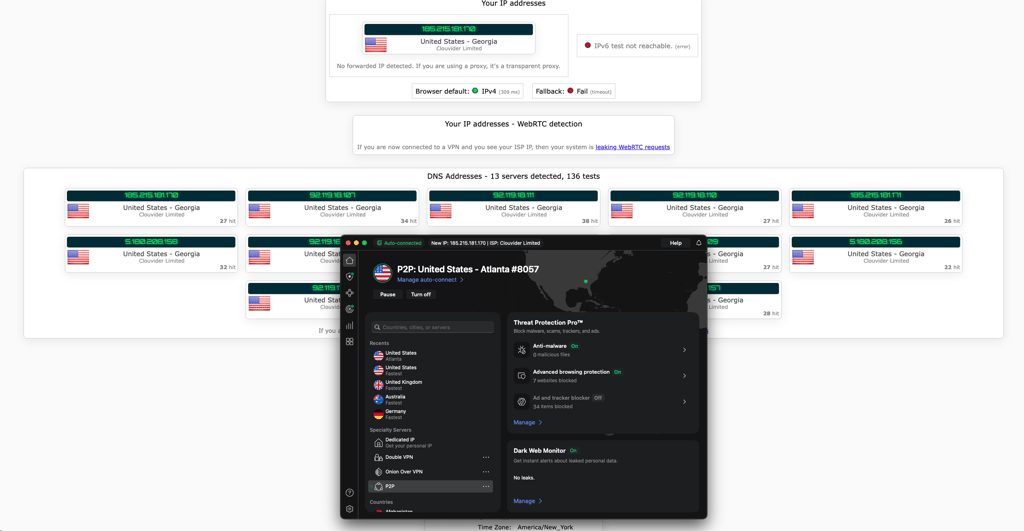
To test VPNs for IP, DNS, and WebRTC leaks, which could expose your real IP address and compromise privacy, we conduct tests on ipleak.net and dnsleaktest.com websites. Those are reliable and trustworthy services that have become the industry standard for many VPN testing labs and reviewers. The same pages are used to check the functionality of a kill switch. In this case, we manually terminate our VPN connection in the task manager or force shut the app. Then, we check whether the service turned off our network and whether the testing sites caught any leaks, such as real IP address exposure.
Speed testing methodology
To test the actual versus advertised VPN service speeds, all VPN tests are conducted under controlled conditions. While real-world performance can vary, we aim to minimize variables that could affect results. Our testing environment typically includes:
- Desktop and mobile devices running up-to-date operating systems.
- A high-speed baseline internet connection measured before VPN activation.
- Tests are performed at different times of day to account for network congestion.
- Servers selected based on geographic proximity and availability.
Once we have ensured a fair testing ground, we then
determine our baseline download, upload, and latency speeds. For this, we use a tool called Speedtest by Ookla. Then, we connect to various VPN servers and compare our baseline speeds with those we get while connected.
With each server we connect to, we also calculate the initial speed retention rate by using this formula: [VPN speed (Mbps) / original speed (Mbps) * 100% = x%]. Lastly, to check for consistency and reliability, we perform similar tests not only with the nearest and the most popular servers, such as the US, UK, Germany, Japan, Australia, and Canada, but also check the capabilities of servers located in niche locations, such as Bhutan, Nigeria, and Mongolia, as an example. By testing both local and distant servers, we ensure the VPN delivers consistent speeds, regardless of where you are in the world.
For P2P tests, we download the latest release of the Linux Ubuntu client using qBitTorrent and take note of the highest recorded download speed in Mbps, as well as the time it took to download the file. Only those VPNs that perform well in our tests and keep at least a 75% rate of initial speed retention make it to our recommendation lists.
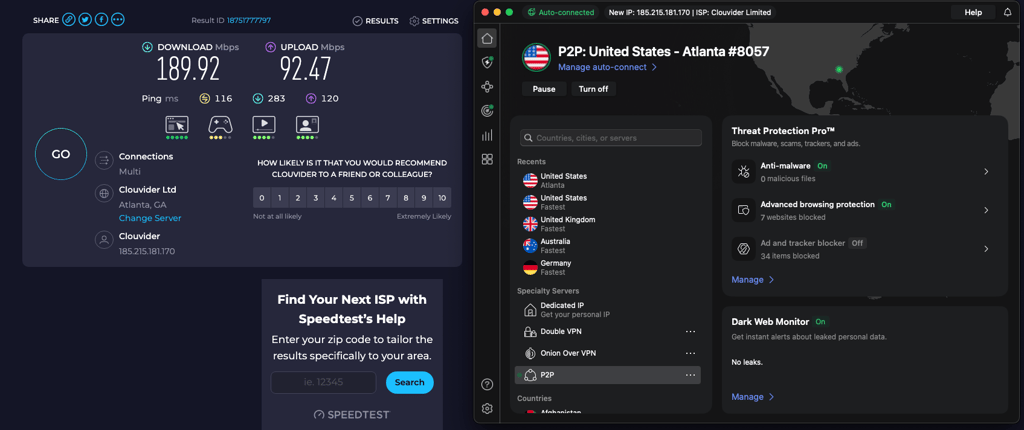
Lastly, we repeat the speed tests with other available VPN tunneling protocols, such as WireGuard, OpenVPN, IKEv2, or proprietary protocols. And while we usually show you the fastest available speeds for each VPN service, we always include the tunneling protocol used to get those speeds.
Unblocking and bypassing geo-restrictions
The geo-unblocking and restriction bypassing tests are pretty straightforward – we connect to different servers and check whether they grant us access to various geo-limited online services. Naturally, we check the most popular platforms, such as Netflix, Amazon Prime Video, Hulu, BBC iPlayer, DAZN, etc. We considered how many servers we had to switch before the VPN allowed us to access these sites and kept track of how many libraries and services each VPN could unlock. Some services, like Netflix, employ strong VPN detection, making it difficult for many providers to reliably unblock content.
Besides streaming sites, we also test the VPN’s ability to bypass restrictions imposed by certain governments on online publications, social media sites, and messaging apps. Additionally, we examine each VPN's capabilities at functioning in restrictive environments, such as workplaces, schools, and public Wi-Fi. For places like Russia and China, where we can’t travel, we rely on the reviews of VPN users and share their insights on the particular VPN service’s efficiency in those countries. And while we do not always test VPNs from heavily censored regions, we evaluate whether stealth and geo-block bypassing features, such as obfuscation, activate correctly and remain stable under restrictive conditions.
VPN performance testing
After doing the groundwork on the core VPN features, we head straight to performance testing. Under the performance umbrella, we keep things like VPN connection speed and stability, server network, and compatibility with different platforms. Here’s what and how exactly we test and measure these things:
Speed and stability
VPN connection speed and stability are evaluated based on factors like download/upload speeds, latency, server load, and jitter (a change in latency that might cause buffering or lagging). Speed is heavily influenced by VPN protocols, such as WireGuard, which is faster, but OpenVPN, which is more secure. Other factors include server distance and congestion. A stable connection also depends on the VPN infrastructure, which affects whether the connection drops or slows down under load. All of this can impact user experience, as slower speeds can cause buffering when streaming or lag when gaming, while instability leads to frequent disconnections. So, before we evaluate speed and stability, we check all of these things. The speed is tested on the speedtest.net page, and regarding stability, the speed tests and general browsing experience are tested multiple times throughout the day to check the server functionality under different server loads.
Server network evaluation
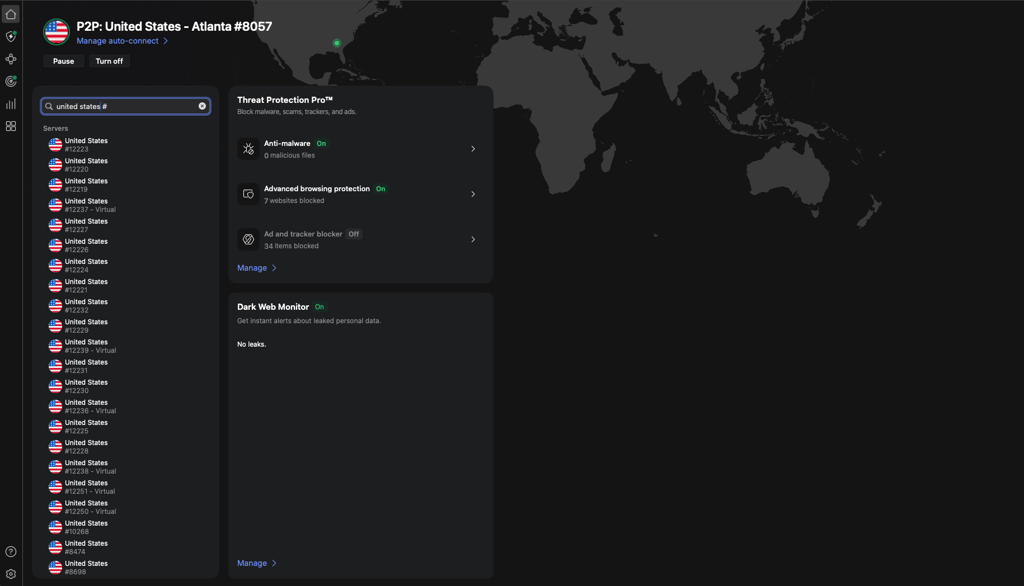
A huge server fleet isn’t just a number to impress, and it impacts user experience more than you might think. So, before ranking a service, we assess server coverage and distribution over locations. A good provider must cover all the most popular locations, such as the US, Canada, UK, and Europe, and offer well-functioning servers in less frequently demanded locations for a well-rounded experience. We favor RAM-only server fleets, which provide greater user data security, and servers that can manage high user loads. Sometimes, a provider might have a less impressive server count, but if they tick the boxes on all other requirements, they make it to our recommended VPN lists, nevertheless.
Cross-platform compatibility
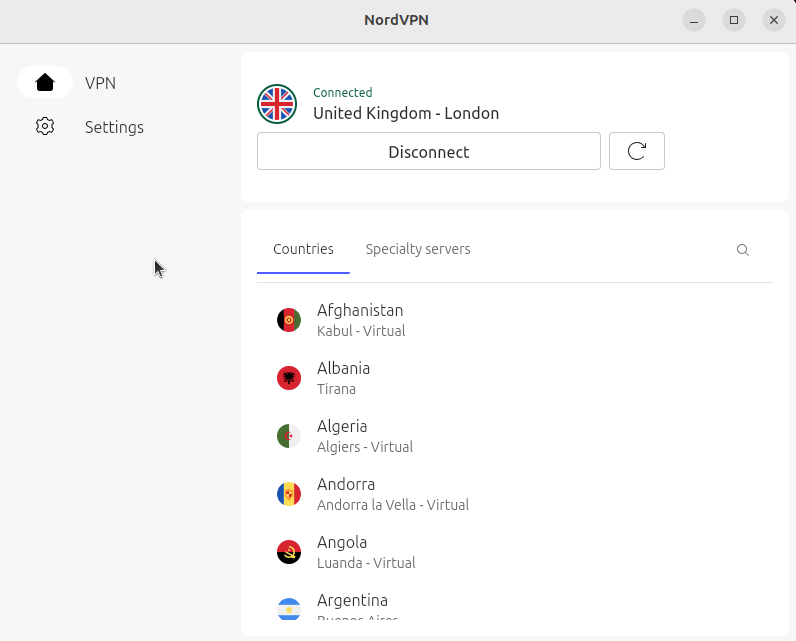
A good VPN should work on all the most popular operating systems, such as Windows, macOS, Linux, and mobile devices, but a great VPN should also be compatible with iOS, Android, ChromeOS, tvOS, and Android TV operating systems. Additionally, we check whether the VPN provider offers any manual connection setups (routers, torrent clients, streaming devices) and browser extensions, and test out the functionality on all available platforms. Therefore, even if a provider claims to be compatible with all of the above, we still test how well its dedicated apps perform on each of the operating systems, smartphones, and other devices.
User experience and customer support
User experience is just as important as any other feature we evaluate, so we do not skimp on resources to check it thoroughly either. Thus, to evaluate the overall user experience of a particular VPN service, we take a deeper look into the following:
Ease of use
Before giving a good grade to any VPN provider, we review things like the user interface, installation process, and overall ease of navigating the VPN apps. The interface should be accessible to all levels of VPN users and made easy to understand and intuitive to navigate. The core features should be easy to find and manipulate, while advanced settings should all clearly explain their functionality. The installation process should not be complicated, and the fewer steps it requires, the more user-friendly we deem it to be. Lastly, the app should be made so that any user would find it quite effortless to use.
Support quality
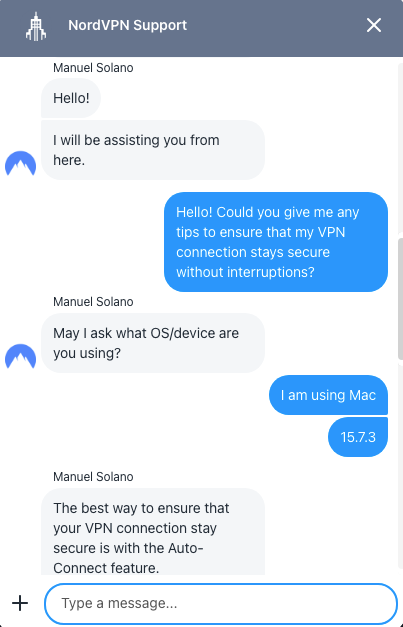
VPNs are complex tools, and even the most experienced users are prone to running into some issues from time to time. So, we also first tested the availability of customer support and then their responsiveness and helpfulness. Our approach involves testing VPNs in both everyday scenarios and more complex situations to ensure they can handle a wide range of user needs. Of course, we check all available customer support contact methods, including live chats, emails, and ticketing, and mention which were the fastest in our reviews.
How we assign VPN ratings
Lastly, after all testing is complete, we assign each VPN service and provider a rating based on performance across multiple categories. These categories are included to reflect their importance to most users, with privacy and security carrying the most significant influence. Our scoring factors typically include:
- Security and privacy.
- Speed and performance.
- Features and usability.
- Streaming and geo-unblocking abilities.
- Device compatibility and support.
- Value for money.
Finally, the scores are normalized to ensure no single category disproportionately affects the final ranking. Below, you will find a more detailed breakdown of how we assign each VPN its ranking:
Factors we consider
Privacy and security features, such as encryption, tunneling protocols, privacy policies, and the like, are the basis of our scoring system and give each score more than half its weight and importance. On top, we consider things like ease of use and the authority of customer support. The latter can be evaluated by considering response times and available support channels. Plus, we take into account the particular VPN’s actual performance – speed, stability, and consistency.
Scoring system
We evaluate VPN services based on two rating systems: an overall score for the product and an intent-based score depending on use cases, such as streaming or privacy. We may use a different scoring system depending on the discussed purpose of the VPN; however, the general weight distribution is:
- 30% security and privacy.
- 25% connection speed.
- 20% user experience and customer support.
- 15% additional features,
- 10% geo-restrictions unblocking.
So, while the overall score might be, for example, 9/10, the score by intent, like streaming, could be lower or higher than that. In any case, we still take into account the key security, privacy, performance, ease of use, and customer service factors in mind before assigning a score. However, the weight of each factor might differ depending on the intent.
Updates and reevaluations
To keep our reviews and recommendations relevant, we periodically check for software updates, such as protocol improvements, security audits, UI redesigns, changes to the privacy policy, added features, and server network expansions for each VPN service on our page. We also rerun our tests to check whether those updates affected any particular VPN performance. New tests and data are cross-referenced with previous results to assess improvements or declines over time, keeping ratings dynamic. After we finish our tests and fact-checking, we update both the reviews and the final score for each provider, keeping the information on the VPNpro page always relevant and up-to-date.
VPNpro tech analysts-writers team
The VPNpro tech analysts-writers team consists of experienced professionals who specialize in VPN testing and cybersecurity topics. The team itself conducts every test, experiment, and in-depth research with the key goal of always providing honest, informative, and unbiased reviews.
Justė Kairytė – Barkauskienė
Senior tech copywriter
Justė is nearing a decade of experience in writing about various topics, including cybersecurity, fintech, and more. She specializes in VPN performance and privacy testing.

Djordje Djordjevic
Cybersecurity analyst and writer
Djordje started writing professionally around 2012 and is now a verified expert in VPNs, online privacy, cybercrime, safe torrenting, and bypassing geo-restrictions.

Chris Bluvhstein
Senior tech writer/analyst
Chris has been writing professionally since 2012 and started specializing in cybersecurity in 2017. Since then, he has analyzed various cybersecurity tools, their capabilities, and their performance.
Our VPN testing and review process at a glance
- Account setup and app installation.
- Baseline internet speed measurement.
- VPN speed and stability testing.
- DNS, IP, and WebRTC leak checks.
- Streaming and geo-unblocking tests.
- Feature and usability evaluation.
- Privacy policy and trust review.
- Final scoring and comparison.


