
Best VPNs for China (Tested in May 2026)


Short summary: Very few VPNs work in China, due to highly restrictive network policies, known as the Great Firewall of China. We’ve tested 32 VPNs over several days we spent in Beijing and found 5 VPNs that still work in China – TotalVPN, Proton VPN, Surfshark, NordVPN, and ExpressVPN. Remember to download your VPN before entering China, as the country blocks almost all foreign VPN sites.
Internet access in China is heavily restricted, and the Great Firewall blocks access to most Western sites and platforms, such as Google, Facebook, X (Twitter), and thousands more. In addition to site blocking, the restrictions also do not allow accessing foreign VPN sites, making downloading a service incredibly difficult. And while tourists rarely get reprimanded for using a VPN service, it is still technically against the law.
What’s more, only very few VPN services are capable of bypassing the Great Firewall and actually maintain a connection and unblock restricted sites in the country. This article and the recommendations you will find are based on real testing. VPNpro team members spent four days in Beijing in May 2026, where they tested 32 different VPN services, out of which only 5 still worked in China. We tested the VPNs with a major Chinese ISP – China Telecom – and checked if they managed to keep a connection and unblock restricted sites and platforms.
For more information on China's internet restrictions, the Great Firewall, and 5 VPN services that still work in China, continue reading our guide.
🏷️ LIMITED OFFER: TotalVPN deal! Get up to 80% OFF 🏷️
Best VPN for China in 2026: shortlist
The top 5 best VPNs for China are TotalVPN, Proton VPN, Surfshark, NordVPN, and ExpressVPN. All of these services showed the most consistent performance in keeping connections within China and unblocking restricted sites. Additionally, all of them have strict no-logs policies for privacy and robust security features.
-
the best VPN for China with the most consistent performance
-
privacy-oriented China VPN that unblocks Western sites
-
an affordable VPN that works in China
-
a fast VPN for China with a broad server network
-
China VPN with robust security features
![TotalVPN mobile logo [IN USE]](https://media.vpnpro.com/totalvpn-mobile.png)
![Proton VPN mobile logo [IN USE]](https://media.vpnpro.com/ProtonVPN-small.jpg)
![Surfshark mobile logo [IN USE]](https://media.vpnpro.com/surfshark-60x60-1.jpg)
![NordVPN mobile logo [IN USE]](https://media.vpnpro.com/Nord-VPN-review.jpg)
![ExpressVPN mobile logo [IN USE]](https://media.vpnpro.com/expressvpn4.png)
OUR VERDICT:
The best China VPN that showed the most consistent performance within the country during our tests is TotalVPN. Although it does not have many advanced features, the robust encryption and active blocked IP swapping allow it to maintain a somewhat stable connection and unblock Western sites. Proton VPN took the second place in our best China VPNs list, due to its very robust focus on privacy, excellent obfuscation features, and consistent connection speeds even within the most restrictive countries.


Since 2018, VPNpro has delivered unbiased, expert-backed insights through in-house research and thorough VPN testing. Our team ensures every review is fact-checked and reliable. Learn how we maintain these high standards in our testing methods.
How I tested the best VPNs that work in China?
Before I go straight to the best China VPNs list, here’s how we tested them. We began with 26 VPN services and tested them on one of the most popular Chinese ISPs, China Telecom. Immediately, we found that some VPNs do not work at all with this ISP, which left us with 23 VPNs to proceed with our testing. None of the VPNs could be downloaded in China directly from their websites, so if you plan to use a VPN in China, make sure to download and install it beforehand. Otherwise, the process can get very complicated. The 23 VPNs we were left with were tested with 10 Western sites and platforms that are currently unavailable in China:
- YouTube
- WhatApp
- Telegram
- Netflix
- Twitter (X)
- Spotify
The top 5 VPNs that performed the most consistently during our test in Beijing unlocked anywhere from 10 out of 10 to 7 out of 10 sites. Here are the results:
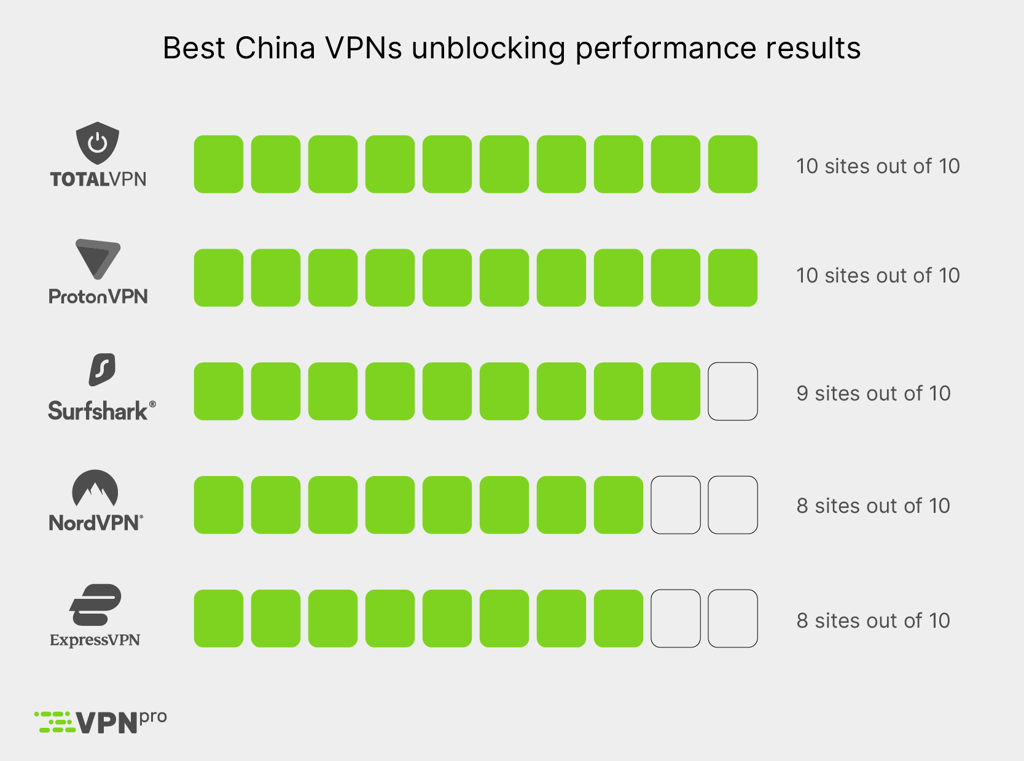
After the website unblocking tests, we also tested speeds. For that, we simply connected our VPNs and used the Speedtest by Ookla tool to measure download and upload speeds. Our baseline connection speed was 600Mbps upload and 600 Mbps upload. Here are the speeds we got when testing the top 5 China VPNs:
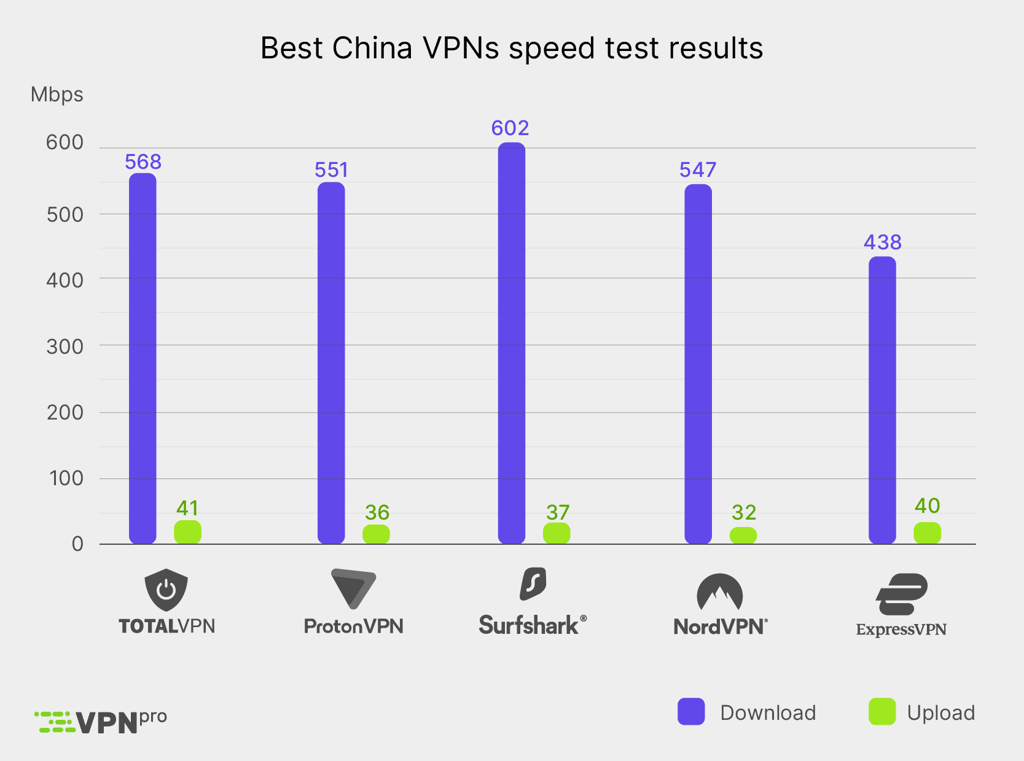
Ultimately, we found the top 5 VPNs that work in China, and you can read their reviews below.

Top 5 VPNs for China: detailed list
- TotalVPN – the overall best VPN for China with the most consistent performance
- Proton VPN – China VPN with a strong privacy focus
- Surfshark – a budget-friendly VPN that works in China
- NordVPN – VPN for China that may unblock Western sites
- ExpressVPN - robust China VPN with strong security features
To find the best VPN services that still work in China, the VPNpro team and I did hands-on testing while visiting Beijing in May 2026. Overall, we tested 32 VPNs, checking whether they could maintain at least somewhat stable connections, bypass the Great Firewall, unblock restricted sites and platforms, and protect our privacy. Ultimately, we found our top 5 best VPNs for China: TotalVPN, Proton VPN, Surfshark, NordVPN, and ExpressVPN. You can read the detailed reviews of their performance in China below.
Top 1. TotalVPN - currently the best VPN for China with the most consistent unblocking performance
![TotalVPN mobile logo [IN USE]](https://media.vpnpro.com/images/170x89/totalvpn.jpg)


90

1800

24/7, email
-
Swift blocked server IP address swapping
-
Small, but robust server fleet
-
Good protocol selection
-
Still does not guarantee a consistent performance
Based on our testing in Beijing, TotalVPN surprised us all by demonstrating the most consistent connection and unblocking performance. That’s why TotalVPN is the overall best VPN for China in our list, and I can recommend using it for anyone who is about to travel to China and wants to access Western platforms, while ensuring their privacy.
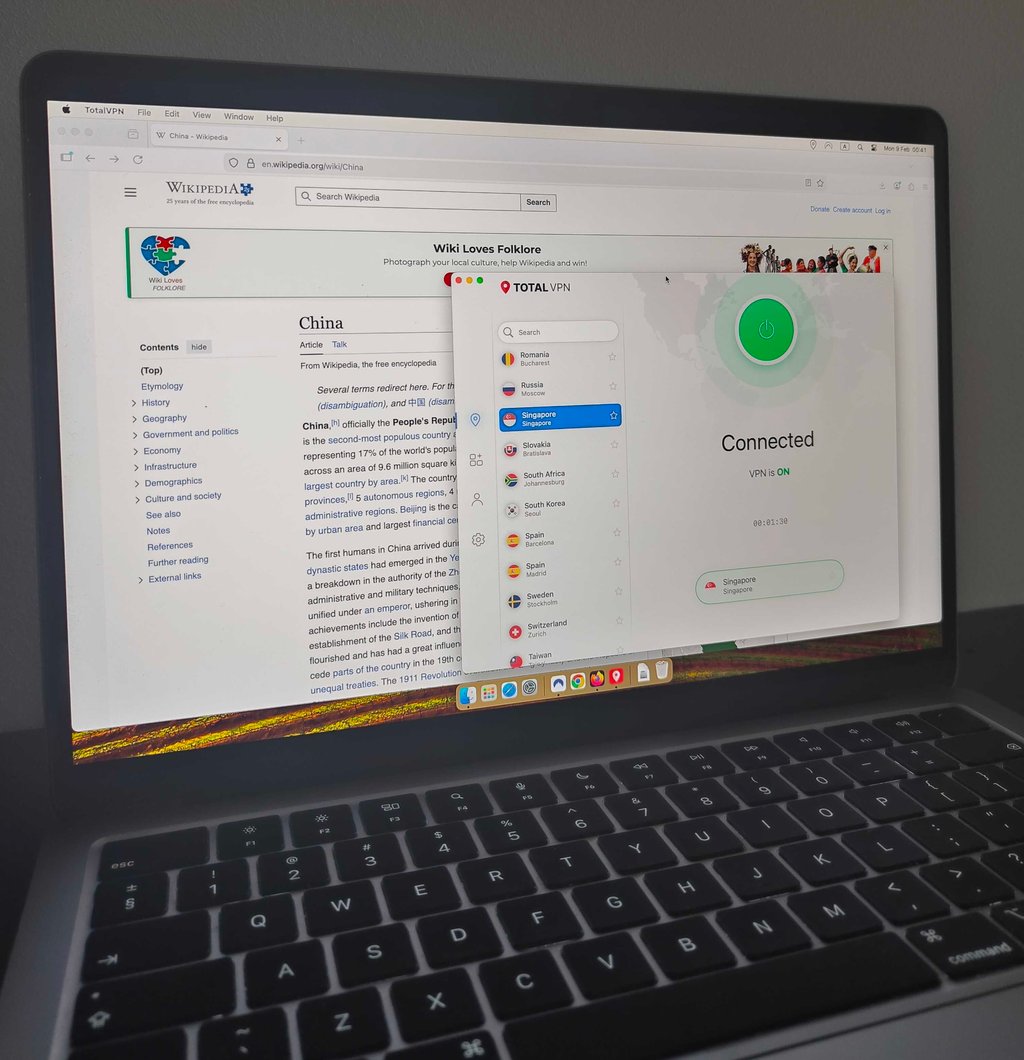
TotalVPN operates a comparatively small fleet of about 1,800 servers in 90 countries. Despite this, I found servers in South Korea, Singapore, Hong Kong, and Japan, which I used to bypass the Great Firewall and access Western media. Choosing the nearest possible server to your location in China guarantees the fastest possible connection speeds. Also, remember that if you do not manage to get a stable connection with one server, you can always try another one in the same location – switching servers usually solves most connection issues.
Although TotalVPN does not offer many advanced features, I found that the robust AES-256 encryption, secure tunneling protocols, including WireGuard for Android, and a very well-maintained server fleet did the job in making this VPN work in China. During our tests, even TotalVPN did not always work; it still showed the best performance. If you have the possibility, I’d also suggest asking TotalVPN customer support to send you manual configuration files to set it up with OpenVPN (TCP/443). TCP over port 443 mimics HTTPS, making the VPN traffic harder to detect. With this setup, the chances you’ll have a more reliable VPN connection can increase significantly. Lastly, I recommend turning on the Always On option on your TotalVPN app, as this way you won’t unexpectedly be left without VPN protection if the connection drops.
TotalVPN covers all the major OSs – Windows, macOS, Android, and iOS – with easy-to-use apps, designed for laptops, smartphones, and tablets. In addition, this China VPN is also extremely budget-friendly, with subscriptions starting at only $1.59/month. All your TotalVPN purchases are risk-free, as they are protected by a 30-day money-back guarantee.
For more information, you can read our in-depth TotalVPN review.
Top 2. Proton VPN - privacy-first VPN that works in China
![Proton VPN mobile logo [IN USE]](https://media.vpnpro.com/images/170x89/proton-vpn-review-logo-2.jpg)
145
20075
-
Robust Stealth protocol
-
Massive global server fleet
-
Split tunneling for optimal network traffic routing
-
Does not guarantee a consistent performance in China
Proton VPN is one of the very few VPNs that still work in China. This is all thanks to its robust privacy features, such as Stealth protocol and military-grade encryption. I’d suggest using Proton VPN to anyone who’s highly concerned about privacy and does not mind potentially inconsistent performance in China.

Proton VPN operates a massive fleet with 20,075 servers in over 145 countries. Naturally, it also covers South Korea, Japan, Singapore, and Hong Kong, offering over 630 servers in these countries. While the list also includes numerous types of specialized servers, such as streaming, P2P, Secure Core, and Tor over VPN, I got a somewhat more consistent performance only when using the Stealth protocol with whatever server I was connected to at the time.
Proton VPN offers numerous handy features you can use to get it to work in China, including a robust Stealth protocol and military-grade AES-256 encryption. However, the combination that worked the best for us was using the Stealth protocol for iOS and Android devices, and the OpenVPN protocol on laptops. Again, I must stress that even if you use these settings, I do not guarantee that you will get a consistent performance. That said, when using Proton VPN, I was at least very sure none of my data would ever see the light of day, as the service undergoes yearly no-logs policy audits and adheres to strict Swiss privacy laws.
Proton VPN is a highly compatible service and works with all major OSs, including Linux, and has apps for almost all devices there are, including smart TVs. Though in the case of a China VPN, you’ll most likely be using Proton VPN’s mobile device and laptop apps. You can subscribe to Proton VPN for around $2.99/month, and you can test it first with the free version. However, remember that the free version does not work in China, due to fewer available advanced features. If you decide to subscribe, your purchase will be protected with a 30-day money-back guarantee.
For more information, read our in-depth Proton VPN review.
Top 3. Surfshark - affordable China VPN with NoBorders mode
![Surfshark mobile logo [IN USE]](https://media.vpnpro.com/images/170x89/surfshark-review-logo-2.jpg)
100
4500
24/7, FAQ
-
NoBorders mode for easier restriction bypass
-
Offers Obfuscated servers (Camouflage mode)
-
Multiple tunneling protocol choices
-
Inconsistent performance
Surfshark is one of the best China VPNs, offering affordable subscriptions and a strong security feature choice. While it might not always work in China, it did show quite good results during our tests in Beijing, especially when using the NoBorders mode. I recommend Surfshark to China visitors seeking an inexpensive, yet capable VPN solution.

Surfshark operates a mid-sized fleet of around 4,500 servers in 100 countries. While it’s a significantly smaller fleet compared to Proton VPN or NordVPN, it still nicely covers Japan, South Korea, Hong Kong, and Singapore. Interestingly, though, unlike with other VPNs, we got the most stable and fastest connections using not the servers in the nearest countries to China, but in the US. Truth be told, there is a very limited number of Surfshark’s servers that actually work in China, and since, due to the nature of the Great Firewall, the list is ever-changing, I recommend emailing Surfshark customer support for the latest list of servers that work in China.
The Surfshark features that mattered the most to me, considering use in China, include the NoBorders and Camouflage (obfuscated servers) modes, as well as robust AES-256 encryption, and a good selection of tunneling protocols. The NoBorders mode is the single most important Surfshark feature in this case, as it masks VPN traffic and instantly shows you a list of servers you can try to use in China. So, we mostly used it and got a good, albeit inconsistent, performance. Additionally, switching to the slower, but harder to detect, OpenVPN protocol and using it with Camouflage mode can be helpful if anything else fails. Also, as with any other VPN on this list, be prepared to switch around the protocols and the servers until you find a combination that works.
Surfshark has apps for most popular devices, though the most important ones for China are its smartphone, tablet, and laptop apps, as it’s highly likely you’ll be travelling with a portable device. As for OSs, you can use Surfshark with Windows, Android, macOS, and iOS. One subscription covers an unlimited number of connections, and the cheapest Surfshark plan is priced at only $1.99/month. You can try Surfshark first with the 7-day free trial or extend the period with a 30-day money-back guarantee.
For more information, read our in-depth Surfshark review.
Top 4. NordVPN - China VPN with consistently high connection speeds
![NordVPN mobile logo [IN USE]](https://media.vpnpro.com/images/170x89/2025/08/nord-rreview.jpg)
137
9300
24/7, email
-
Obfuscated servers for stealth
-
Good tunneling protocol choice
-
Servers in Japan, South Korea, Singapore, and Hong Kong
-
Very inconsistent performance
NordVPN is one of the top VPNs for China, offering a large secure server fleet, obfuscated servers, and numerous other security and privacy features. While it may not have always worked in China when we tested it, when it did, it easily unblocked restricted sites.
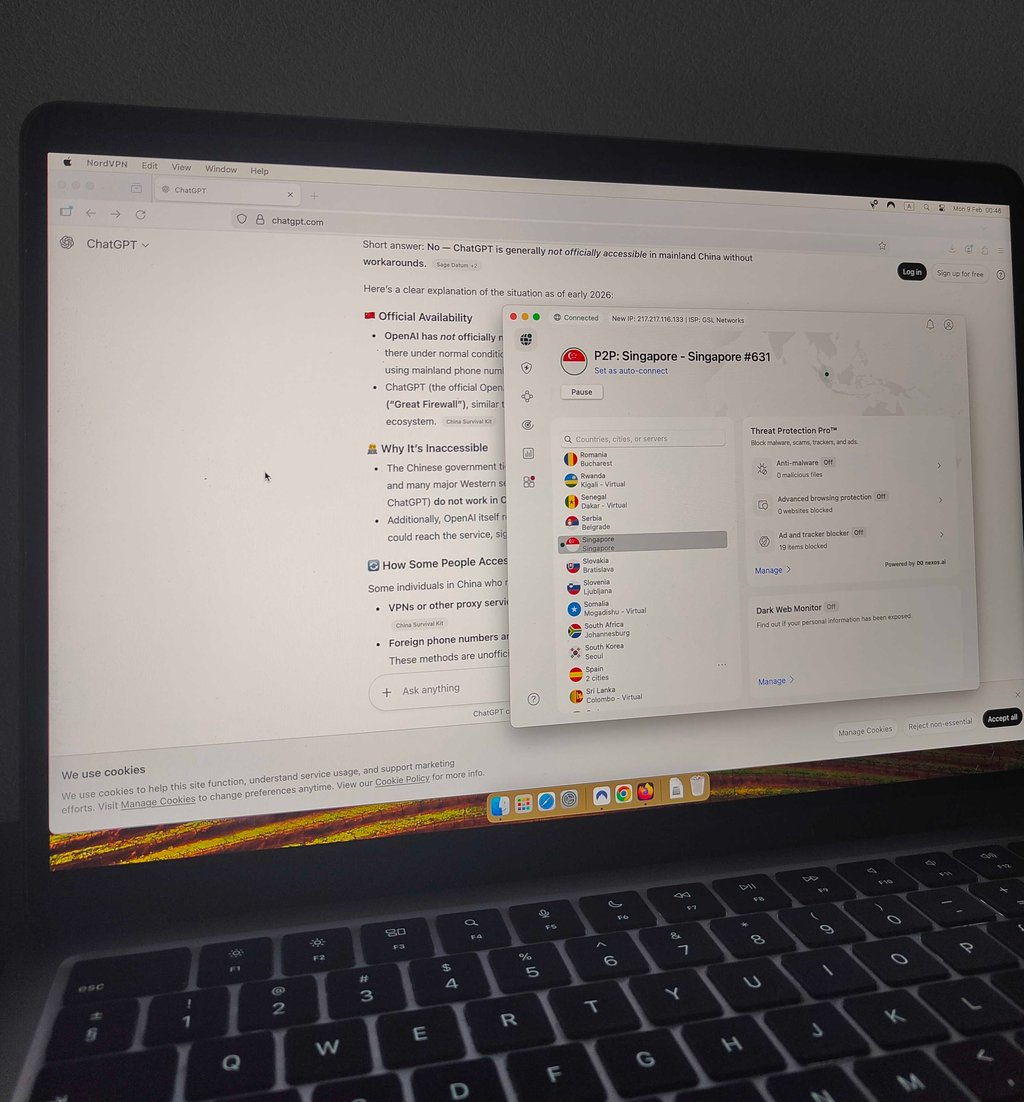
NordVPN operates a huge fleet of 9,300 servers in around 137 countries. Naturally, such a large network also covers neighboring China countries, including South Korea, Hong Kong, Singapore, and Japan. However, establishing a connection to any of the servers in these locations proved to be very inconsistent, but we did achieve better results when using Obfuscated servers. I must stress that you should get and install NordVPN before you enter China, as the provider’s site is completely blocked within the country.
Although NordVPN is brimming with various security and privacy features, the ones we’ve used the most often in our tests were the proprietary NordLynx tunneling protocol and Obfuscated servers. This combination proved to be the most successful of the ones we’ve tried. However, if it does not work for you, you can try using the OpenVPN (TCP/443) protocol as in some cases it may perform better. Don’t forget to turn on the Kill Switch to prevent any IP slips if the connection drops. Lastly, you can also try using a Hong Kong eSIM and then connecting to NordVPN – this is the most reliable way to get it to work in China.
NordVPN is a highly compatible service and can be used with all major OSs, including Linux, with apps designed for smartphones, tablets, laptops, PCs, and plenty more. Overall, I found NordVPN pricing to be somewhere in the mid-tier, with the cheapest subscription starting at $3.09/month. If you’d like, you can first try out NordVPN during a 3-day Android free trial or extend the period with a 30-day money-back guarantee.
For more information, read our in-depth NordVPN review.
Top 5. ExpressVPN - robust VPN for China to unblock restricted sites
![ExpressVPN mobile logo [IN USE]](https://media.vpnpro.com/images/170x89/expressvpn2.png)
105
3000
24/7, email
-
Offers IP rotation
-
Features automatic obfuscation on all servers
-
Has automatic tunneling protocol choice
-
Still not very reliable in China
ExpressVPN is a very robust VPN for China with a mid-sized server fleet and numerous features to help bypass the Great Firewall. While it did not show consistent performance in our tests in Beijing, we could use it to unblock restricted sites.

In total, ExpressVPN has around 3,000 servers in 105+ countries. Though the fleet is nowhere near the size of NordVPN or Proton VPN, it still covers places like Japan, South Korea, and Singapore for convenient connections. That said, we had the best results using ExpressVPN’s servers in Hong Kong, the US (Los Angeles) and the UK (Wembley), so remember that physically closest servers may not always be the most optimal choice with ExpressVPN. I really liked the fact that ExpressVPN uses automatic obfuscation on all of its servers, and I didn’t even have to turn anything on.
One of the ExpressVPN features that proved to be very useful in China was the automatic tunneling protocol choice. This meant that the VPN itself determined which tunneling protocol was best in the current situation, and we often saw it switching between Lightway and OpenVPN (TCP/443) and back again. Additionally, ExpressVPN uses IP rotation, which means the service assigns you a new IP address every several minutes, making it harder to trace your VPN use. Lastly, I recommend enabling DNS leak protection for better privacy, as well as the Network Lock (kill switch) to prevent any IP slips. Lastly, don’t forget that ExpressVPN, like any other VPN on this list, may not work on the get-go, so if you run into this situation, just keep trying different servers until you succeed.
ExpressVPN can be used on all of the most popular devices, such as tablets, smartphones, PCs, and laptops, and is compatible with all the major OSs, including Linux. Additionally, ExpressVPN is a fairly affordable VPN with subscription prices starting at $2.44/month. You can try out this service during a 7-day free trial for iOS and Android mobile devices. If you decide to subscribe, your purchase will be protected with a 30-day money-back guarantee.
For more information, read our in-depth ExpressVPN review.
Best China VPNs comparison
| Best China VPN | Unblocks social media? | Unblocks streaming services? | Servers | Starting price |
| 1. TotalVPN | ✅ Yes, inconsistently | ✅ Yes, inconsistently | 1,800 servers in 90 countries | $1.59/month |
| 2. Proton VPN | ✅ Yes, inconsistently | ✅ Yes, inconsistently | 20,075 servers in 145 countries | $2.99/month |
| 3. Surfshark | ✅ Yes, inconsistently | ✅ Yes, inconsistently | 4,500 servers in 100 countries | $1.99/month |
| 4. NordVPN | ✅ Yes, inconsistently | ✅ Yes, inconsistently | 9,300 servers in 137 countries | $3.09/month |
| 5. ExpressVPN | ✅ Yes, inconsistently | ✅ Yes, inconsistently | 3,000 servers in 105 countries | $2.44/month |
![TotalVPN winner logo [IN USE]](https://media.vpnpro.com/images/160x40/2025/05/totalvpn-winner.png)
Is a VPN legal in China?
Technically, using VPNs in China is not fully legal unless the VPN service is government-approved. Chinese law requires all VPN service providers to obtain a license from the Ministry of Industry and Information Technology (MIIT) and to follow strict rules. Only services with government-issued licenses are considered legal under Chinese regulations. Individuals using unapproved VPNs to access blocked sites fall into a legal grey area and, under the letter of the law, may be in violation of Chinese internet access regulations.
Officially, however, both the operation and provision of unauthorized VPN services without approval are illegal. Historically, VPN providers have been prosecuted, and Chinese authorities block foreign services’ traffic and even websites.
As for individual users, enforcement of the laws and regulations mostly falls on distributors and companies, rather than tourists. With tourists, warnings and fines aren’t a common thing, but on rare occasions, such measures have been documented, when VPN use involved political content or reselling. That said, using VPNs that are not approved by the government to bypass the Great Firewall is still restricted and discouraged.
The most important thing to remember regarding non-government-approved VPNs is that their websites and apps are blocked inside China. So, if you plan to travel there and use a VPN, make sure to download and set up your VPN before arriving. If you neglect to do this, it might get really hard to download or update a VPN app within the country.
To sum it up, using a VPN in China is rarely a problem for tourists, but that might be a whole other thing for locals. Be as it may, technically, only government-approved VPNs are fully legal in the country, and unapproved use remains legally sensitive and heavily monitored.
Current internet restrictions in China
China’s censorship filters, or the Great Firewall, aim to control all political content, public opinion, and foreign competition. This means that most Western platforms are completely inaccessible in China without special tools, such as VPNs or proxies.
Currently, the Great Firewall blocks thousands of foreign websites and apps. Censorship is also an ever-changing thing in China, as sites can be added or removed from the list over time. Both public and private networks strictly follow state content rules and limit access to platforms that do not comply with local regulations.
Below, you’ll find a table listing just some of the most popular websites and platforms that are currently blocked in China:
| Category | Blocked websites |
| Videos and streaming | YouTube, Netflix, Twitch, Vimeo, Dailymotion, Hulu, BBC iPlayer |
| Social networks | Facebook, Instagram, X (Twitter), Pinterest, Snapchat, Tumblr, LinkedIn (full version), Quora, TikTok |
| Messaging | WhatsApp, Telegram, Signal, Discord, Slack, Line, Viber |
| News and information | New York Times, BBC, CNN, Reuters, Bloomberg, The Guardian, The Wall Street Journal, Wikipedia |
| AI and generative tools | ChatGPT, Google Gemini, Claude, Perplexity AI, Midjourney, Character.AI |
| Music | Spotify, SoundCloud, Pandora Radio |
| Search engines | Google Search and other Google services, DuckDuckGo, Bing (often unavailable), Tor Browser |
| Adult content | Most major adult sites, including PornHub, xVideos |
Unblock restricted sites in China with TotalVPN
How to download a VPN if you are already in China?
If you are travelling to China, it is best to download and set up your VPN before you enter the country. However, if you are already in the country, it is still possible to get a VPN, though it is much harder as the official VPN websites and mainstream app stores are blocked by the Great Firewall. Here’s what you can try to download a VPN if you are already in China:
- Contact VPN support for mirror or alternative links. Almost all official VPN sites are blocked in China, but you can get up-to-date mirror or alternative download links directly from a provider. Email your chosen VPN’s customer support, and they will send you Windows, macOS, Android, and iOS installers that aren’t blocked in China.
-
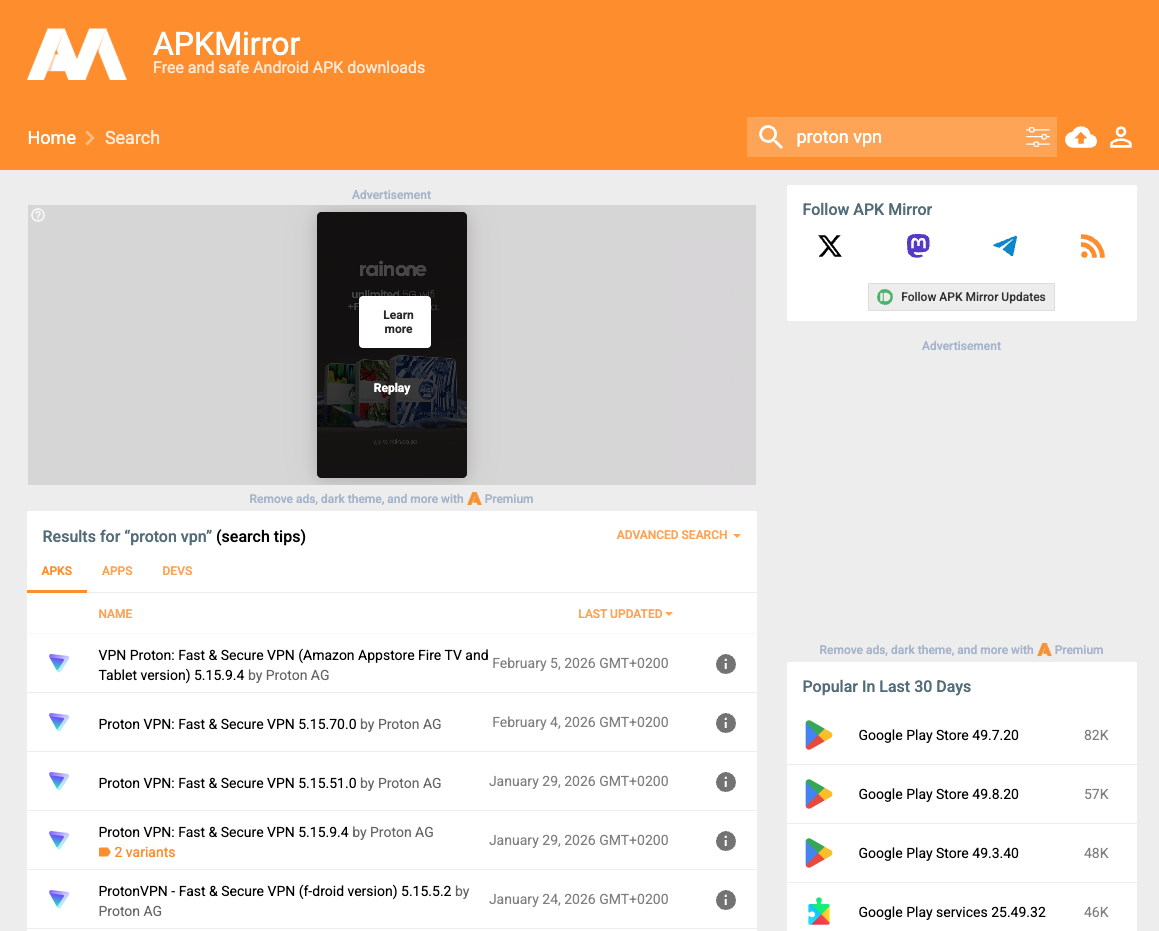
Download APK file for Android. Use trusted sources, such as APKMirror or APKPure, to look for official VPN APKs provided by the company. Remember to enable “Install unknown apps” in Android settings, then sideload the APK to install your VPN app.

- Contact someone outside China to send installers. Have them email you the installation file or share it via a cloud service like OneDrive or Outlook, which still often works in China. Download the file while connected to hotel Wi-Fi (international hotels usually offer more la networks) or any other less-restricted network. Install the VPN.
- Use Tor Browser with bridges to access blocked VPN sites. Tow Browser is blocked in China, so you will have to use bridges or pluggable transports, like Snowflake or obfs4, to make this method work. First, request Tor installation files via [email protected]. Then, set up the browser with bridges by reading these instructions. Once you have Tor running, access your preferred VPN’s site or mirror links and download the installer.
- Use an international SIM or eSIM. We’ve noted that using eSIMs, such as Saily, Airalo, and Nomad, allows us to sometimes access blocked sites, such as Facebook, in China without restrictions. This may not always work, but it's worth trying. If you successfully access restricted sites with an eSIM, open a VPN website, download the installer, and install the app before switching back to the local Chinese connection.
That said, the easiest and most secure way to get a VPN in China is to download, install, and test it before you enter the country. Once in China, you’ll find many websites blocked, making accessing sites and downloading files much more complicated.
Can I use a free VPN in China?
No, we couldn’t find any free VPN services that work reliably in China. This is because free VPNs lack the crucial advanced obfuscation needed to bypass restrictions, do not have a robust and secure enough server infrastructure, as well as the resources to circumvent the Great Firewall. Ultimately, free VPNs often fail to even connect in China or are quickly blocked, making them highly unreliable for everyday browsing or accessing blocked services.
Moreover, free VPNs usually have crippling data limits, slow speeds, very few servers, and poor privacy practices. For example, some free VPN services are known to log and sell user data to third parties or advertisers, which is especially risky in a high-censorship environment.
Overall, paid VPNs are much safer and more reliable in China because they invest in obfuscation technology that disguises VPN traffic, stronger encryption, IP/DNS/WebRTC leak protection measures, use stealth protocols, and IP rotation to avoid blocks. Also, paid VPNs have reliable customer support, which might become an important factor when trying to use a VPN in China.
We’ve identified the best premium VPNs you can use for free in China for a limited time through free trials and money-back guarantees. However, my top China VPN recommendation remains TotalVPN, as it showed the best performance of all the VPNs we’ve tried during our research trip to Beijing.
Final recommendation on using a VPN for China
A VPN in China can be a crucial tool for any visitor, as usual Western sites and platforms, such as Google, Facebook, YouTube, and thousands more, are currently blocked in the country. The biggest problem is that not many VPNs are capable of bypassing the Great Firewall, keeping a connection from China, and unblocking restricted Western sites. So, to find out which VPNs still work in China, we set out to test 26 of them while visiting Beijing.
Ultimately, we found that TotalVPN is currently the best VPN for China. Although it’s a relatively small provider, it showed the best results in keeping consistent connections and unblocking restricted sites within China. However, we still cannot give a 100% guarantee that it will always work flawlessly. Don’t forget to download and install your VPN before entering China, as most VPN websites are blocked within the country.

![Surfshark weekly deals logo [IN USE]](https://media.vpnpro.com/surfshark-weekly-deals.svg)
![Proton VPN winner logo [IN USE]](https://media.vpnpro.com/2025/05/protonvpn-winner.png)


- Best VPN for China in 2026: shortlist
- How I tested the best VPNs that work in China?
- Top 5 VPNs for China: detailed list
- Is a VPN legal in China?
- Current internet restrictions in China
- How to download a VPN if you are already in China?
- Can I use a free VPN in China?
- Final recommendation on using a VPN for China