
Free vs paid VPN comparison: which one to choose?


Quick summary: After testing and comparing free vs paid VPNs, I found that paid providers are always better if you’re looking for a secure VPN with extra benefits. However, it all comes down to your needs, whether you need a VPN for anonymity, streaming, or basic protection while browsing.
Many internet users who are just learning about VPNs are often tempted to choose a free VPN over a paid service. Whether you’re using a paid or free service, a VPN's main purpose is to protect your online privacy. With a VPN, you should be able to protect your data on public Wi-Fi, bypass geo-restrictions, and increase your overall online security.
However, some paid VPNs are often expensive, and many free VPNs cannot guarantee security. Choosing between a premium and a free VPN might be challenging, especially if you have never used a VPN before. Continue reading this free VPN vs paid VPN article to better understand which one is better for you in 2026.
🏷️ LIMITED OFFER: NordVPN deal! Get 76% OFF NordVPN + 3 months FREE 🏷️
Our recommended paid VPN services
-
overall best paid VPN service
-
premium VPN with many extra features
-
best free VPN for online privacy
-
user-friendly and flexible paid VPN
-
cheapest VPN for simple browsing
![NordVPN mobile logo [IN USE]](https://media.vpnpro.com/Nord-VPN-review.jpg)
![Surfshark mobile logo [IN USE]](https://media.vpnpro.com/surfshark-60x60-1.jpg)
![Proton VPN mobile logo [IN USE]](https://media.vpnpro.com/ProtonVPN-small.jpg)

![TotalVPN mobile logo [IN USE]](https://media.vpnpro.com/totalvpn-mobile.png)


Since 2018, VPNpro has delivered unbiased, expert-backed insights through in-house research and thorough VPN testing. Our team ensures every review is fact-checked and reliable. Learn how we maintain these high standards in our testing methods.
What is a free VPN?
A free VPN allows users to connect to a VPN server, change the IP address, and encrypt traffic without a paid subscription. While free VPNs are not as advanced as paid services, reliable free VPNs are definitely suitable for simple everyday use. If you’re looking for a VPN for basic protection while browsing online, a free VPN might be enough. Additionally, free VPNs are a great testing tool for beginners just learning about VPN services.
While free VPNs can be enough for simple browsing, it’s important to note that they usually come with some limitations. Most free VPNs impose data caps and deliver slower speeds, which is not ideal if you’re planning to use the VPN daily. Additionally, they often have a limited number of servers, and some don’t even let you choose a location, which greatly limits the VPN's ability to bypass geo-restrictions. Besides, some free VPNs include ads, which can be annoying, especially if you use the VPN every day.
Although seeing ads might be inconvenient, it’s often one of the ways free VPNs make money. However, many free VPNs also use other methods that are not as innocent as they seem.
Try NordVPN - the most reliable paid VPN
How do free VPNs make money?
Even though free VPNs offer basic services, they still cost money to maintain. While you can use the VPN completely free, the provider still needs to pay for its servers, security measures, and app development. Since the service doesn’t get any revenue from its customers, it has to use other methods to earn money. Here are a few ways that free VPNs make money:
- Implementing ads. Some free VPNs include various advertisements in their apps to earn revenue.
- Collecting and selling user data. Some free VPNs monitor and sell user data, such as browsing history, to advertisers and brokers. Other VPNs even sell users' bandwidth, turning your network into a node through which others are routed.
- Invasive upselling techniques. Free VPNs usually have severe limitations. To earn more money, free VPNs often urge users to upgrade to a paid subscription to avoid any data, speed, or server limitations.
Free vs paid VPN: key differences explained
While you can find excellent free and paid VPN services, it’s important to understand the difference between them before making any decision. To help you understand which option is better for you, I compared paid vs free VPNs in practice:
| Feature | Free VPN | Paid VPN |
| Price | Free | Paid subscription |
| Servers | ❌Limited servers | ✅Many servers worldwide |
| Data | ❌1-10 GB data cap | ✅No data cap |
| Speed | ❌Slower | ✅Fast |
| Ads | ❌Often includes ads | ✅No ads |
| Security | ✅Basic security | ✅Robust security |
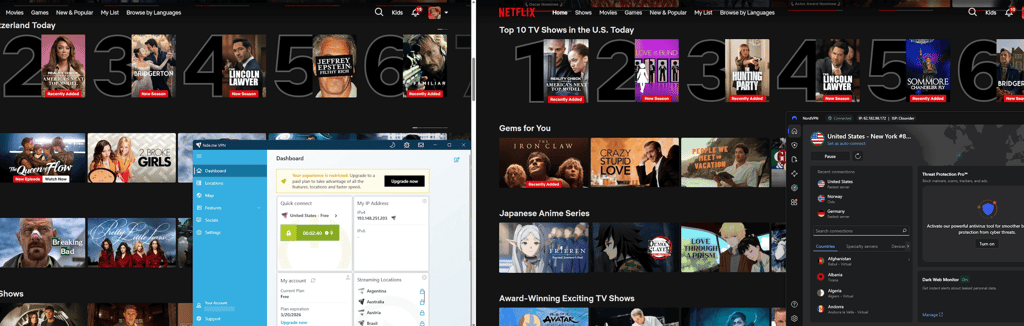
| Streaming | ❌Cannot bypass geo-restrictions | ✅Unblocks popular streaming services |
| Customer support | ✅Knowledge base | ✅Knowledge base, 24/7 live chat support, email, phone |
You should consider your browsing habits and overall VPN use cases when choosing between a free and a paid VPN. Free VPNs offer basic protection and are suitable for simple browsing, but they do have limitations, such as slower speeds, fewer servers, ads, and data caps.
Paid services are often pricey, but they guarantee total online anonymity, allow streaming geo-restricted content from anywhere, and deliver fast speeds with no limits. My testing revealed that NordVPN is the best paid VPN in 2026, as it ensures privacy at all times and unrestricted browsing, no matter where you’re located.
Our verdict: Paid VPN services win over free providers due to robust security, unrestricted streaming, fast speeds, and no server or data limitations. For the best experience, choose NordVPN, which is the best paid VPN in 2026.
Security and encryption
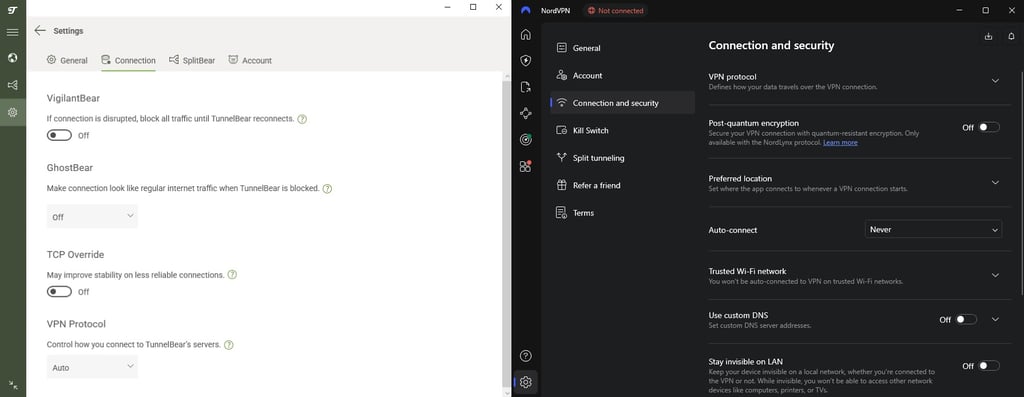
Security is one of the most important factors to consider when choosing a VPN provider. Using a VPN encrypts your internet traffic as it is routed through a VPN tunnel. This way, your activity stays private and protected from various threats online, including third parties and even your ISP.
If you’re wondering, are free VPNs safe, it depends on the provider. Most free VPNs are secure, but they use weaker VPN protocols, which cannot guarantee the same level of security as paid services. However, there are a few questionable free VPNs that don’t use all necessary security measures and may even contain malware or tracking libraries, putting your privacy at risk.
Paid services, on the other hand, usually use the standard AES-256 encryption and offer secure VPN protocols such as WireGuard and OpenVPN. They also often undergo independent security audits, which makes them more trustworthy.
Privacy and data logging
Most free and paid VPNs claim to be no-logs providers. A truly no-logs VPN ensures that user data is not monitored or stored. This data includes browsing history, IP address, connection data, and VPN connection timestamps.
Paid VPN services usually have reliable no-logs policies, meaning that they don’t monitor or collect any information about users' online activity. These claims are often backed up as many paid VPNs undergo independent audits. For example, NordVPN is one of the most reliable paid VPNs that claims to have a strict no-logs policy and verifies this by completing a sixth independent audit by Deloitte.
Unfortunately, many free VPNs cannot be trusted, even if they claim not to keep logs. Some free VPNs collect users' logs and use them for marketing purposes or even sell this data to advertisers.
Secure your privacy with NordVPN
Speed and performance
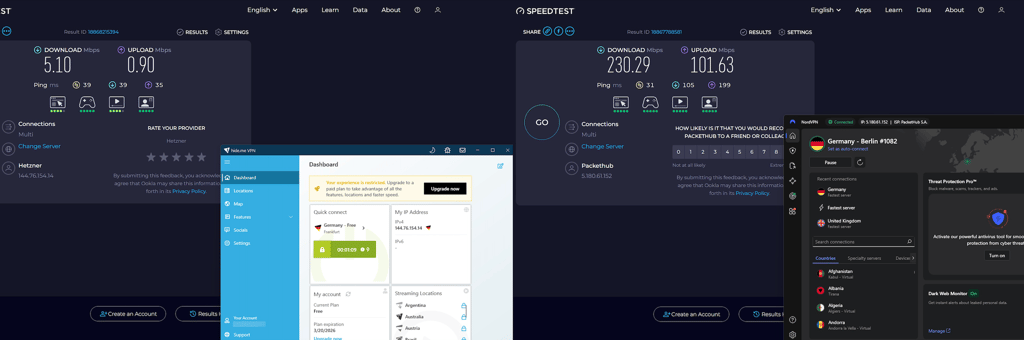
Speed is another crucial factor you should consider when choosing between a paid and a free VPN provider. Using a VPN that significantly slows your speed might lead to buffering while streaming, higher latency while gaming, and overall delays when simply browsing online. If you want to use the internet without interruptions, choose a VPN that delivers fast speeds.
Paid VPNs are usually faster as they offer many servers with robust infrastructure. Since paid services have more servers, fewer users are connected to each server, leading to better overall speeds.
On the other hand, free VPNs usually have a very limited number of servers, which means that many users are connected to the same IP address. As a result, you will most likely notice speed drops. Additionally, some free VPNs have data limits or throttle speeds once you exceed them.
Server network and locations
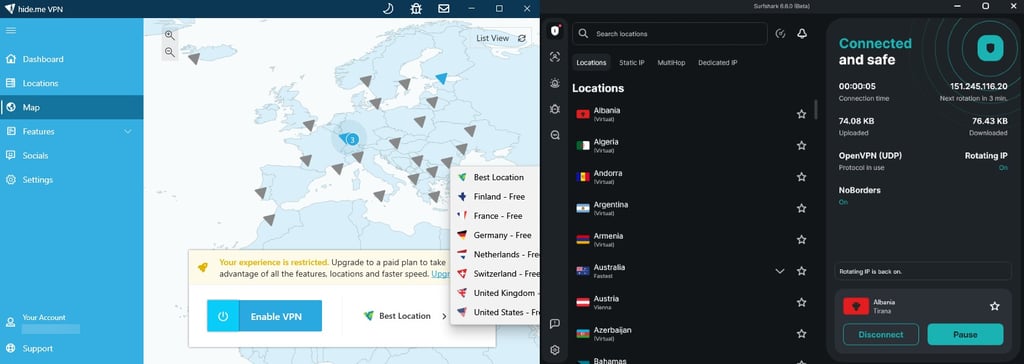
Having access to a wide selection of VPN servers worldwide is important as it affects your speed, what services you can access, and overall connection stability. By connecting to servers in other regions, you’ll be able to access geo-restricted content from anywhere. Additionally, choosing a less crowded server or a server closer to your actual location can improve your speeds.
Paid VPNs usually have hundreds, if not thousands, of servers across different countries. For example, with Surfshark, you can connect to 4,500+ servers in 100 countries worldwide, including some less common locations such as Saudi Arabia and the Isle of Man. As a result, users can easily unblock various services from anywhere using Surfshark servers.
Free VPNs usually offer only 8-15 server locations, which is far fewer than those of paid services. If you need a VPN for daily browsing, a free VPN might be enough. However, if you’re looking for a fast VPN to bypass geo-restrictions, a free VPN's server limit might get in the way.
Streaming and torrenting
While the main purpose of a VPN is online privacy, many use it for streaming and torrenting. By using a robust VPN, you can bypass geo-restrictions and watch content that is available in your region. Additionally, a truly secure VPN can enhance your privacy while downloading P2P files.
Unfortunately, I found that free VPNs are usually not reliable for streaming or torrenting. Many free VPNs don’t support P2P traffic and often have data caps, which means that they will not work for torrenting. Additionally, due to the limited number of servers, free VPNs are usually not suitable for streaming as they cannot guarantee access to geo-restricted services.
Paid VPNs are much more reliable for streaming and torrenting as they offer many servers and allow P2P traffic. For example, NordVPN has specialized P2P servers and has been proven to work with all major streaming services.
Are free VPNs safe to use?
While there are a few reliable and safe free VPNs, most come with serious limitations and risks. Usually, free VPNs cannot guarantee the same security as paid services due to weaker encryption and outdated VPN protocols. Using a VPN that cannot guarantee robust encryption might lead to stability issues and IP and DNS address leaks. Additionally, free VPNs are not always transparent about their logging policy, and there are quite a few providers that collect and even sell user data to third parties. Some providers even include intrusive ads, which are not only inconvenient but might also contain malware. However, while most free VPNs are not safe, the overall security depends on the provider.
The only free VPN that I could recommend is Proton VPN. Proton VPN, in my eyes, is the best free VPN as it’s a privacy-oriented provider. The provider is based in Switzerland, a country with strict privacy laws. It also has a strict and audited no-logs policy, meaning that your data is private at all times. While Proton VPN offers a reliable free version that uses all necessary security measures, it also has an advanced paid version. Proton’s paid services enhance your overall security further with extra features, like Secure Core VPN and NetShield Ad-blocker. It’s important to compare Proton VPN free vs paid features to understand which plan works best for you.
When is a free VPN enough for you?
While paid VPNs are generally more reliable, free VPNs might be enough in some cases. If you’re looking for a simple, everyday VPN for basic security, a free VPN might be enough for you. However, be sure to choose a provider that is transparent, doesn’t keep logs, and uses robust encryption.
A free VPN might also be a great option if you need it temporarily. Using public Wi-Fi in public places like airports, cafes, or shopping malls is risky, as hackers might attempt to access your device. Using a free VPN in such places is better than not protecting your device at all.
However, if you want to use the VPN daily, enhance your security, and access geo-restricted content, I would advise choosing a paid VPN. A free VPN, unfortunately, will not be able to provide the same level of service daily as paid VPN providers.
Why is a paid VPN better than a free VPN?
Paid VPNs are better than free VPNs as they offer a higher level of security, provide more benefits, and can help you to browse the internet without restrictions from anywhere. Here are the main reasons why I believe that a paid VPN is better than a free VPN in 2026:
- Stronger security. Paid VPNs offer all necessary security measures, including robust encryption, an audited no-logs policy, and extra security features for total anonymity online. Unfortunately, there are not many free VPNs that offer even basic security.
- Faster speed. Since free VPNs usually have a very limited number of servers, which leads to many users connecting to the same server, they are usually very slow. Paid VPNs, on the other hand, offer many servers worldwide, allowing you to switch between them in case of speed issues.
- Extensive server network. Paid VPN providers offer thousands of servers worldwide, which allows users to access various geo-restricted content. Free VPNs cannot compare as they usually offer 8-15 server locations and often connect you to a random server location.
- Available customer support. Paid VPN users can usually reach customer support 24/7 via different channels like live chat, email, or phone. If you’re using a free VPN and encounter any issues, you will most likely need to solve them yourself by checking information online.
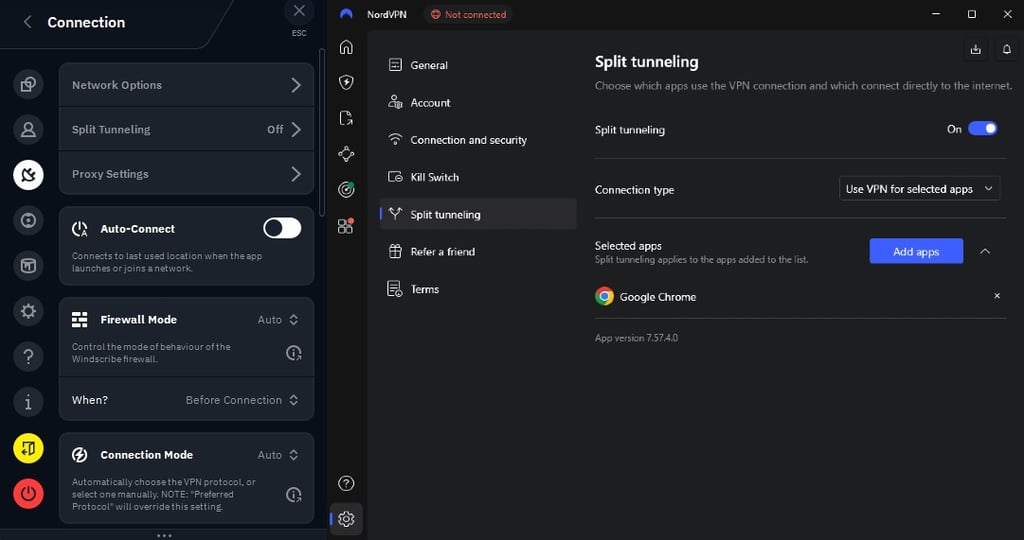
- Advanced features. Apart from necessary security features, paid VPN providers often offer extra features like smart DNS, split tunneling, a kill switch, ad blockers, and password managers. By choosing a free VPN, you will not get access to advanced features.
Try NordVPN - the best paid VPN
Final verdict: which one is right for you?
Paid VPN services can be expensive, which is why users often look for free VPNs. If you’re choosing between free VPN vs paid VPN, the decision ultimately depends on your VPN needs. If you need a simple VPN for basic browsing and temporary use, a free VPN might be enough. However, while there are some safe to use free VPNs, I found that paid VPNs are better in 2026.
Most paid VPNs use robust encryption, don’t keep logs, and offer advanced security features, which means that your digital footprint will be secured at all times. They also don’t have severe limitations, so you can expect a much smoother online experience. I’ve tried numerous paid VPNs and found that NordVPN is the best paid VPN in 2026 due to its robust security toolkit and fast speeds. With NordVPN, you’ll not only be able to secure your privacy but also bypass geo-restrictions on various services online.

![Surfshark weekly deals logo [IN USE]](https://media.vpnpro.com/surfshark-weekly-deals.svg)
![Proton VPN winner logo [IN USE]](https://media.vpnpro.com/2025/05/protonvpn-winner.png)
FAQ
Is it better to use a free VPN or a paid one?
It is better to use a paid VPN rather than a free VPN. The main purpose of a VPN is online privacy, and most free VPNs cannot guarantee all necessary security measures. Additionally, paid VPNs can be used for streaming, gaming, and torrenting, while free VPNs are only suitable for temporary browsing. If you want to try a premium VPN, choose NordVPN, which offers stable connections, fast speeds, and extra security features.
What is the difference between a free VPN and a paid VPN?
The main difference between a free VPN and a paid VPN is that paid services are more trustworthy. Paid VPN providers use all necessary security measures, undergo independent audits, and offer extra benefits. While free VPNs are often tempting, they are rarely safe to use as they are not transparent about their logging policy and often use weaker encryption.
What are the disadvantages of a free VPN?
The main disadvantages of a free VPN are its limitations and security risks that it comes with. Free VPNs usually have a limited number of servers and data caps, which is not ideal for daily use. Additionally, some free VPNs are not very transparent about their logging policy and use weaker encryption, which puts your privacy at risk. To avoid this, choose a premium VPN, such as NordVPN.
Can you be tracked with a free VPN?
Yes, you can be tracked with a free VPN. Usually, free VPNs don’t use the necessary security measures, including robust encryption, which might lead to data leaks. Due to this, your personal information, such as your IP address, might be tracked even if you’re connected to a free VPN.
Can I torrent with a free VPN?
Technically, you might be able to torrent with some free VPNs, but it’s not recommended. Most free VPNs don’t support P2P traffic, so you won’t be able to download files privately. Even if your VPN provider allows P2P traffic, speed and data limitations might come in the way.
Is a free VPN good enough for streaming?
No, a free VPN is not good enough for streaming. Free VPNs usually offer a limited number of servers, which means that you will not be able to bypass geo-restrictions on some streaming services. Additionally, free VPNs are slower than paid services, which is not ideal for streaming.
Do free VPNs sell your data?
Yes, many free VPNs sell your data. Since free VPNs don’t earn revenue from subscriptions, they have to look for other ways to earn money. Often, free VPNs tend to monitor and collect data about your browsing history and sell it to advertisers or other third parties.


